Remote coaching tends to become reactive over time. Athletes don't always share how they're really feeling for various reasons: some don't want to overreact, some don't want to feel like a burden, some assume what they're experiencing is normal.
So they say less than they should, and coaches end up working with incomplete information more often than either side realizes.
Most coaching platforms were built to organize workouts. That's useful, but it doesn't address the communication gap that quietly drives most coaching frustrations.
Steady State was built around a different idea.
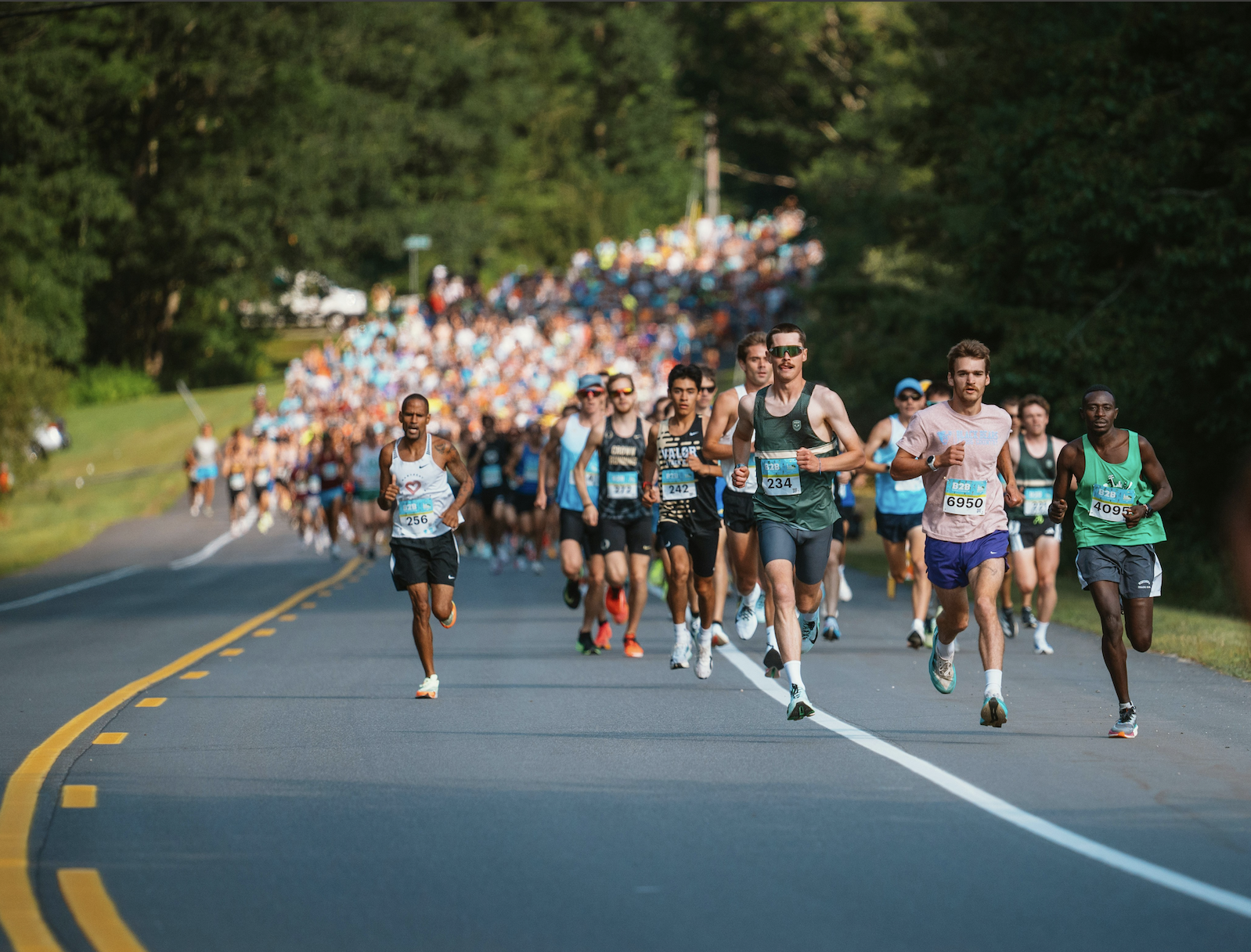
When communication between athletes and coaches improves, outcomes tend to improve with it. Built-in daily recovery prompts give athletes a simple, low-friction way to share how they're feeling without needing to decide whether it's worth mentioning. Post-activity exertion scoring adds context to the athlete's effort over time. Custom metrics let coaches track what actually matters for a given athlete: pain, illness, stress, fueling, sleep, menstrual symptoms - whatever is relevant.
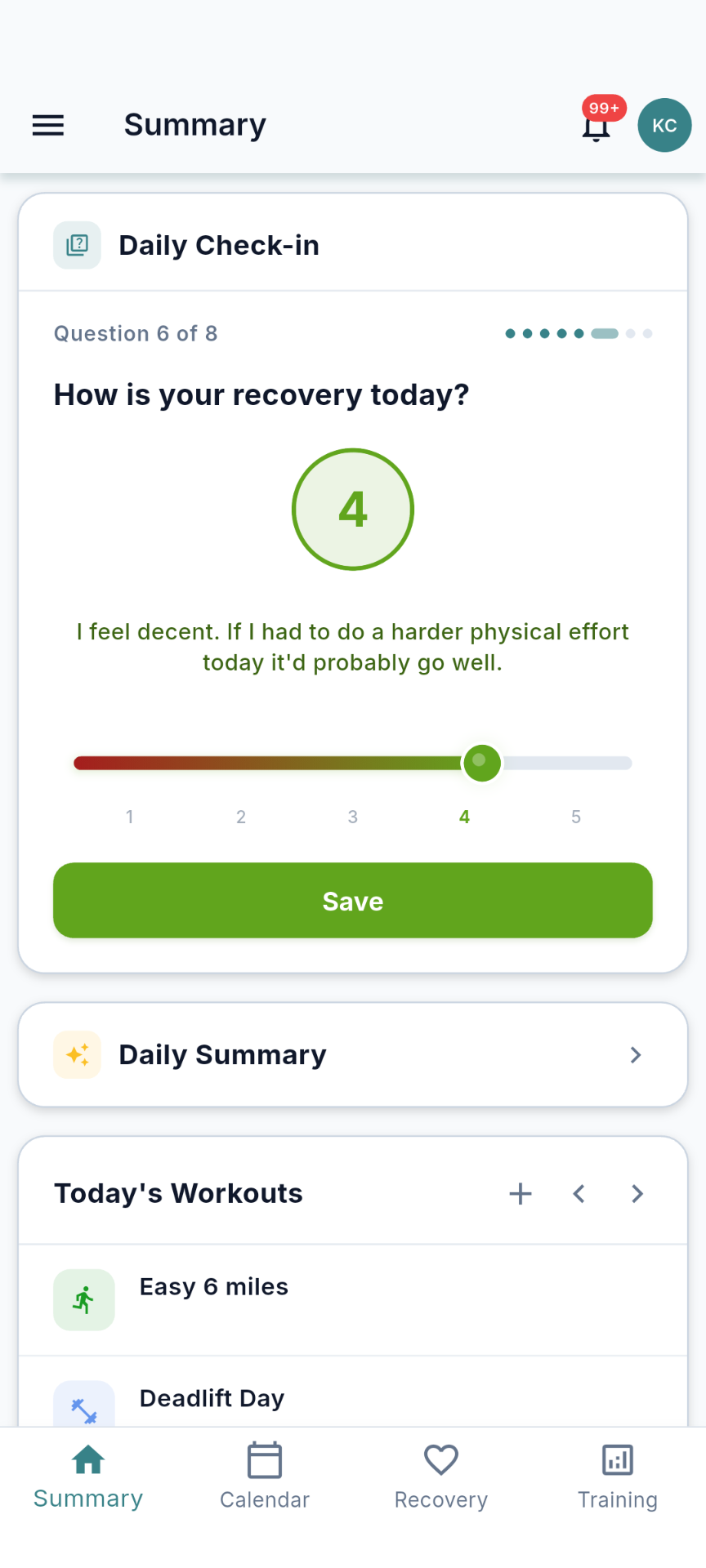
Athletes automatically tracking how they feel leads to trends surfacing earlier. Coaches who've been using it for a few months often describe how their conversations start changing. Rather than asking "how are you feeling?", you're asking "your recovery scores have been low this week - what's going on?" This is a more productive place to start and allows for adjustments proactively BEFORE an injury comes on.
Built for coaches who know great coaching is more than writing a plan.
A great coach cares about the person over the athlete, and long-term goals over short-term peaks. They pay attention to patterns, they're willing to have hard conversations, and they make decisions that protect an athlete's future. If that's how you already think about coaching, Steady State was built with you in mind.
This wasn't built by a software team guessing at coaching pain points.
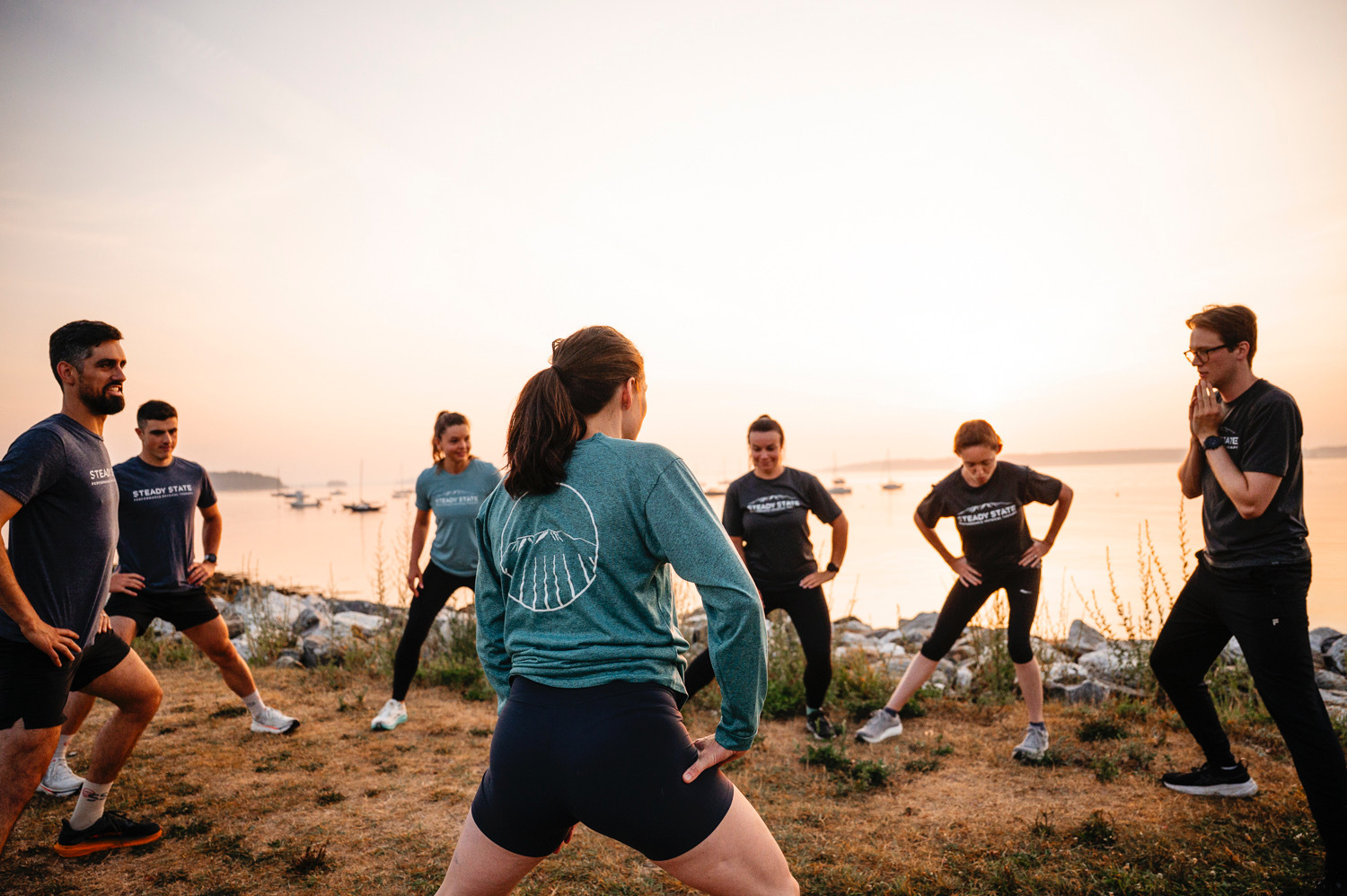
Steady State came out of six years running a performance physical therapy and coaching clinic, working daily with runners across the full range of ability and injury history. It was built by a lifelong runner, a D1 national qualifier, a Doctor of Physical Therapy who specializes in running, and someone who coaches a professional running team and uses this exact system every day. It's the platform we wanted to exist years ago.
How it Works
Automatic athlete visibility
Athletes answer a few recovery questions each day and log effort after workouts. Over time, the platform surfaces trends so you're not trying to connect the dots manually. You stop chasing updates and start noticing patterns before they become problems.
Communication that stays attached to training
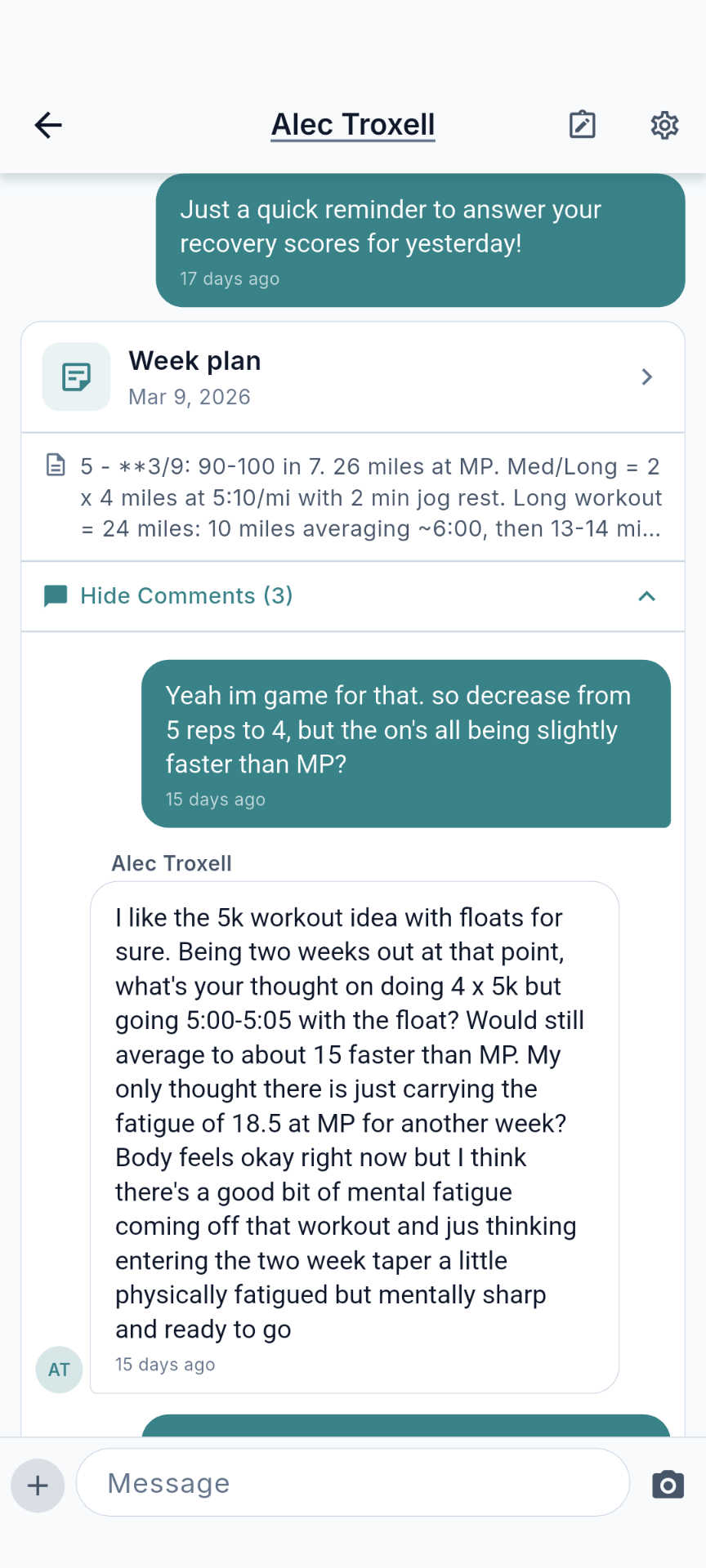
Workout comments and general messages all live in one place. You no longer have to look through scattered texts, emails, and workout notes to remember what happened weeks ago. The conversation stays in one centralized place while also remaining connected to the training it's about.
Coaching leverage
You can build workouts quickly, set automated alerts when certain thresholds are crossed, and create workflows that send messages based on athlete data. AI is available for summaries and efficiency - you decide how much you use it. The judgment stays yours.
What tends to change after a few months
Athletes start sharing more because the daily prompts make it easy and low-stakes. You start responding to how they're actually doing rather than how they reported feeling on their last workout. Early adjustments become normal. Injuries happen less often, and when something does flare up, you usually saw it coming.
This is a different experience for both sides of the relationship. Athletes feel like you're paying attention to the full picture, and that trust tends to show up in retention and in how they talk about their experience with you.
Used by 100+ coaches and 1,000+ runners
"Working with Steady State has brought new energy to my 15-year coaching career. I was hesitant to shift platforms, but the system supports the relationship rather than replacing it. My clients picked it up quickly, and the experience has only improved."
- Krissy Moehl, Pro Trail Runner & Coach
"We use Steady State daily with the Maine Distance Project pro team - adjusting training based on recovery trends, often before setbacks occur. It's the same system our own PTs and coaches use in our performance PT clinic."
- Kelton Cullenberg, Founder, Steady State
Switching is low-risk by design
Start with one to three athletes. Let them try it alongside you and bring data over gradually. If it doesn't improve how you coach, you don't continue.
We offer transition assistance as we know the act of switching systems isn't fun. We can help carry over saved workouts, exercise libraries, and athlete data.
Start with 1-3 athletes. Free Pilot.
Or book a quick walkthrough if you want to see it first.